Looking for a Savannah neighborhood with real personality? The Starland District stands out because it blends historic homes, adaptive-reuse spaces, and a lively lineup of local hangouts in one compact, walkable area. If you are trying to decide whether Starland fits your lifestyle, budget, or renovation goals, this guide will help you understand what living here actually feels like. Let’s dive in.
What Starland District Means
When people say “Starland,” they are usually talking about the Thomas Square and Streetcar Historic District area. Local sources note that you may also hear overlapping names like Thomas Square, Metropolitan, and the Streetcar Historic District.
In practical terms, this is a roughly 35-block area stretching from the south edge of Forsyth Park to Victory Drive. It includes about 1,100 historic buildings and more than 50 shops and restaurants, which gives it a true neighborhood feel instead of a single-purpose residential pocket.
That mix is a big part of Starland’s appeal. Local organizations describe it as Savannah’s creative hub, with an eclectic feel shaped by residents, small businesses, arts spaces, and everyday gathering spots.
Why Starland Feels Different
Some Savannah neighborhoods are defined mostly by architecture. Starland is different because the housing and the lifestyle work together. You are not just choosing a house here. You are choosing a setting with cafes, galleries, makers, live events, and walkable day-to-day options.
Public market data also shows why buyers keep Starland on their shortlist. As of March 2026, the Thomas Square and Starland area had a median sale price of $637,450, an average of 87 days on market, and a 95.9% sale-to-list ratio. Half of homes sold above list price, which suggests buyers still compete for the right property.
The neighborhood is also notably accessible without a car for many daily outings. Public score data shows a Walk Score of 84 and a Bike Score of 83, which supports Starland’s reputation as one of Savannah’s more connected in-town areas.
What Homes You’ll Find in Starland
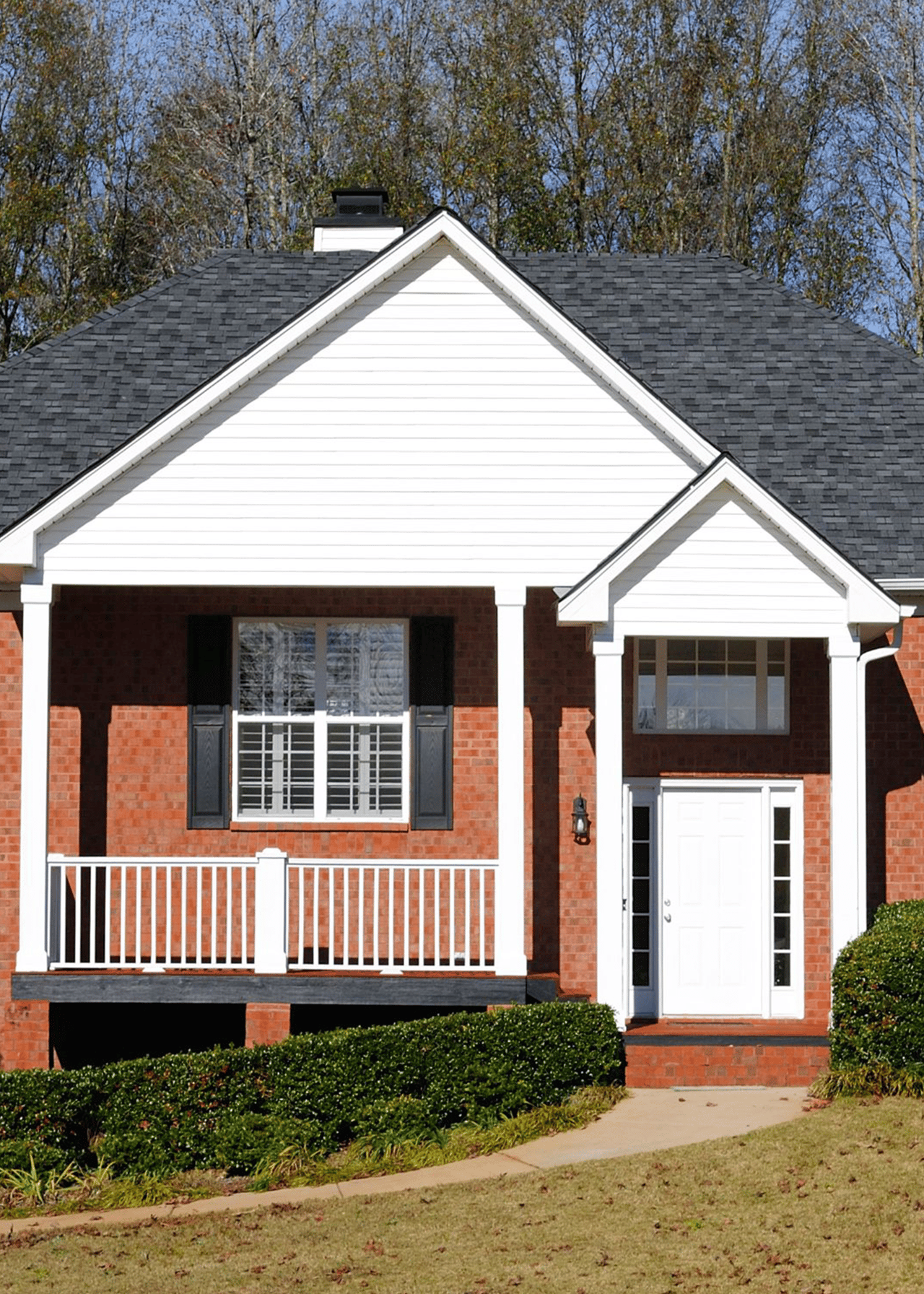
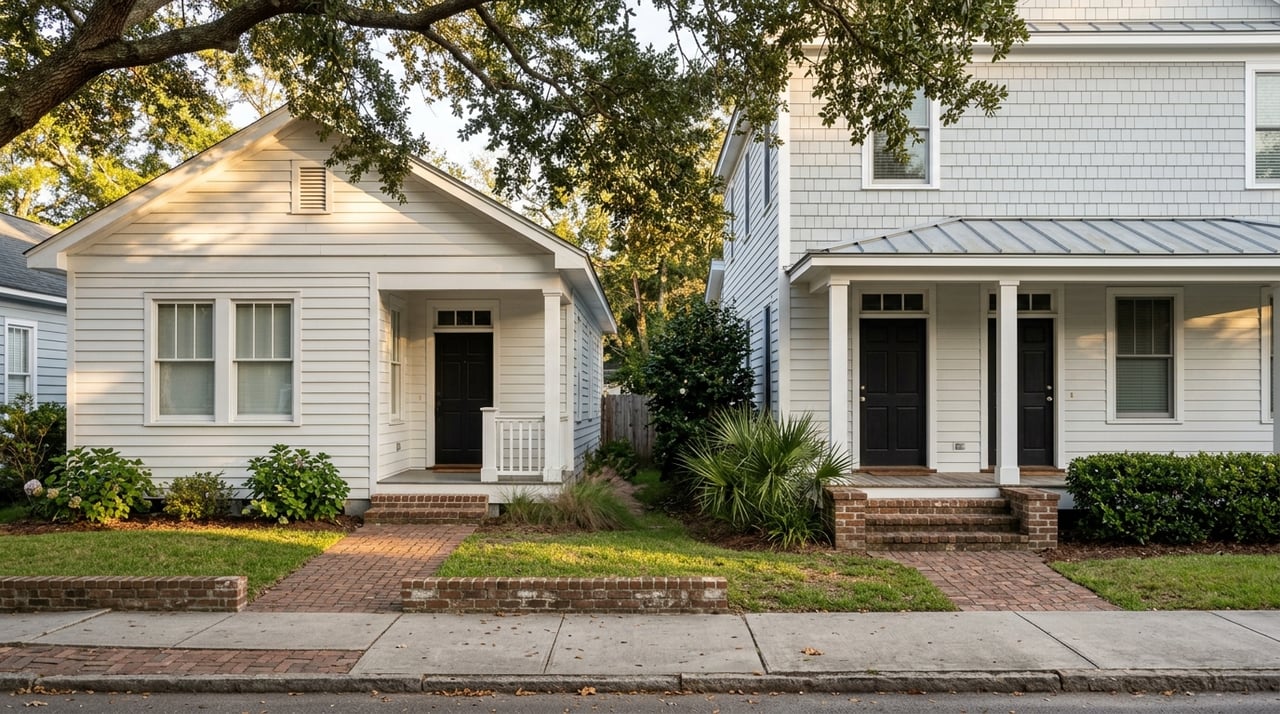
If you want cookie-cutter housing, Starland is probably not your match. The district includes a wide range of home types and architectural styles, including cottages, bungalows, shotgun houses, duplexes, and larger historic residences.
The historic inventory includes single-family and multi-family homes, which gives the area more variety than many buyers expect. You may see side-hallway homes, hall-parlor layouts, Queen Anne details, Craftsman influences, Folk Victorian features, and other period styles within just a few blocks.
That variety matters because it creates a wider spread in price points, finish levels, and renovation needs. In recent public closing examples, smaller two-bedroom homes sold around $389,000, while larger four- to six-bedroom properties reached roughly $745,000 to $749,900.
For buyers, that means condition matters as much as size. A carefully renovated home, a duplex with updates, and a property that still needs major work can all exist within the same small section of the neighborhood.
Older Homes With Character
Starland attracts buyers who want details you do not always find in newer construction. Tree-lined streets, brick road sections, landscaped medians, and historic facades give the area a strong sense of place.
Inside the housing stock, you may find original layouts, front porches, older woodwork, and the kind of design quirks that make historic homes memorable. That charm is often the reason people fall for the neighborhood in the first place.
Multi-Unit and Adaptive-Reuse Options
Starland is not only about detached houses. The district has long included both single-family and multi-family residences, and that gives buyers and investors more flexibility.
You may come across renovated duplexes, townhome-like units, and occasional loft-style or condo-style spaces tied to adaptive reuse. Projects in the area have shown that preserved historic structures can be repositioned for modern living while keeping neighborhood character intact.
Starland Hangouts and Daily Life
The other half of the Starland story is what happens once you step outside your front door. Visit Savannah describes the area as a haven for local artisans, with restaurants, cafes, galleries, independent shops, and entertainment packed into the district.
Highlighted local spots include Starland Strange, Front Porch Improv, Water Witch Tiki, Starland Yard, Picker Joe’s, Starlandia Supply, Fleet Feet, and The Cottage Shop. Together, they help shape the district’s casual, creative rhythm.
Food and drink are especially central to the neighborhood identity. Starland Yard is known for rotating food trucks, pizza, a bar program, and recurring music, art, and culture events.
Local neighborhood sources also point to nearby favorites like Two Tides Brewery, Smol Bar, Bloom Coffee Shop, Graveface Records, and the mural-covered Starland Dairy. Starland Dairy is one of the clearest examples of adaptive reuse in the district, with the former dairy transformed into a place to eat, drink, gather, read, and even stay overnight.
Community Events Add Energy
A neighborhood feels more livable when it has regular community programming, not just good buildings. In Starland, the seasonal De Soto Street Market brings that extra layer of activity with more than 20 local and regional makers, plus live music, kids’ activities, and food and drink from nearby businesses.
That kind of event calendar supports what many buyers are really looking for. You get a neighborhood that feels active and local, not staged or manufactured.
How Starland Compares Nearby
Starland sits in an interesting position within Savannah’s market. It is above the citywide median sale price, slightly above Ardsley Park-Chatham Crescent based on current public figures, but below the premium pricing seen in Downtown Savannah and Victorian District-West.
Here is a simple snapshot from recent public market data:
| Area | Median Sale Price | Days on Market | Walk Score |
|---|---|---|---|
| Thomas Square / Starland | $637,450 | 87 | 84 |
| Downtown Savannah | $1,014,623 | 70 | 92 |
| Victorian District-West | $815,000 | 55 | 90 |
| Ardsley Park-Chatham Crescent | $598,278 | 39 | 53 |
| Savannah Citywide | $329,830 | Noted citywide | 44 |
This helps explain Starland’s appeal. You are paying for location, character, and walkability, but you are still below some of Savannah’s top-tier in-town price points.
At the same time, the average 87 days on market suggests buyers often have room to be selective. That can be helpful if you want time to compare condition, review renovations carefully, and avoid rushing into a property that looks better online than it does in person.
What Buyers Should Watch Closely
Starland can be a smart fit if you love older homes and neighborhood character, but it rewards careful due diligence. The biggest opportunity here is often tied to renovation, layout potential, or mixed-use history. The biggest risk is assuming every charming property has been updated well.
If you are shopping in Starland, pay close attention to:
- Overall renovation quality
- Exterior condition and visible maintenance
- Permits and scope of past work
- Functional layout for your daily needs
- Whether the price reflects current condition
This is especially important because one block can include very different levels of finish. A polished renovation and a project home may share the same street appeal from the curb, but they can offer very different long-term costs.
Historic Review Matters Here
Because the neighborhood sits inside Savannah’s local historic overlay, major exterior projects are subject to review. The Metropolitan Planning Commission states that the Historic Preservation Commission reviews demolition, new construction, and other major projects, while preservation staff review other exterior work.
That does not mean you should avoid the neighborhood. It means you should understand the process before you buy a property with major plans in mind.
For the right buyer, this can be part of the upside. Preservation-minded rehabilitation in the district has already shown value, including projects that used historic tax incentives and helped catalyze surrounding properties.
Who Starland Fits Best
Starland often makes sense for buyers who want more than square footage alone. It can be a strong match if you value walkability, historic character, local business energy, and the possibility of finding a home with personality.
It may also appeal to buyers and small investors who understand older housing stock and are willing to evaluate condition carefully. Since the area includes single-family homes, duplexes, and adaptive-reuse spaces, there is more than one way to live here or invest here.
For military buyers or anyone relocating to Savannah, Starland can be especially appealing if you want an in-town lifestyle and a neighborhood identity that feels distinct from newer suburban options. The key is making sure the home itself matches your timeline, budget, and tolerance for future updates.
The Bottom Line on Starland Living
Starland offers one of Savannah’s most layered neighborhood experiences. You get historic homes, a strong sense of place, and an active local scene shaped by makers, restaurants, markets, and adaptive-reuse spaces.
That combination is hard to fake, and it is why Starland continues to stand out. If you want a neighborhood where the home and the hangouts matter equally, this district deserves a closer look.
When you are ready to explore Starland with a team that understands Savannah block by block, connect with Trophy Point Realty Group for practical guidance on buying, selling, investing, or relocating.
FAQs
What is the Starland District in Savannah?
- The Starland District generally refers to the Thomas Square and Streetcar Historic District area, a roughly 35-block neighborhood south of Forsyth Park known for historic buildings, local businesses, and a creative identity.
What kinds of homes are in Starland District?
- Starland includes a mix of single-family homes, duplexes, cottages, bungalows, shotgun houses, and some adaptive-reuse loft-style or condo-style spaces.
How walkable is Starland District for daily life?
- Public market data shows Starland with a Walk Score of 84 and a Bike Score of 83, which supports its reputation as a walkable, connected in-town neighborhood.
How does Starland pricing compare with other Savannah neighborhoods?
- Based on recent public figures, Starland sits above Savannah’s citywide median and slightly above Ardsley Park-Chatham Crescent, while remaining below Downtown Savannah and Victorian District-West.
What should buyers know about renovating a home in Starland?
- Because Starland is within a local historic overlay, major exterior work may require review through Savannah’s preservation process, so it is important to understand renovation limits and approvals before you buy.
What makes Starland different from other Savannah neighborhoods?
- Starland stands out for the connection between its historic housing stock and its active mix of cafes, shops, art spaces, markets, and community gathering spots.