If you own a home in Savannah’s Historic District, you already know buyers are not just shopping for square footage. They are looking for original details, craftsmanship, and a sense of place. The challenge is making your home feel polished and easy to picture living in without covering up the very features that make it special. This guide will show you how to stage a historic district home in a way that highlights its character, respects local preservation rules, and helps your listing make a strong first impression. Let’s dive in.
Why staging matters in historic homes
Staging is not about turning a historic property into a generic showroom. It is about helping buyers see how the home lives today while still noticing the details that set it apart from newer construction.
That matters because staging still has measurable value. According to the National Association of Realtors’ 2025 staging report, 83% of buyers’ agents said staging made it easier for buyers to visualize a property as a future home, 29% said staging increased the dollar value offered by 1% to 10%, and 49% of sellers’ agents observed shorter time on market.
For many Historic District sellers, the goal is simple: present the home clearly, photograph it well, and make its architectural details easy to read. That usually means careful editing, not a full redesign.
Start with the basics first
Before you move a single chair, focus on the prep work that gives staging the best chance to succeed. The same NAR survey found that sellers’ agents most often recommend decluttering, deep cleaning, and improving curb appeal before listing.
Historic homes benefit even more from these basics because they often have smaller room footprints, more visual detail, and older finishes that can feel busy if the home is overcrowded. When you remove excess furniture and personal items, buyers can better focus on ceiling height, trim, fireplaces, staircases, and natural light.
A good first checklist includes:
- Remove extra furniture that makes rooms feel tight
- Clear surfaces so original materials stand out
- Deep clean floors, windows, trim, and mantels
- Reduce visual noise from cords, bins, and oversized decor
- Freshen exterior landscaping where needed
Highlight the character-defining features
The best staging plan for a historic home starts with the architecture. The National Park Service preservation guidance emphasizes retaining and preserving historic character and identifying distinctive features rather than replacing or obscuring them.
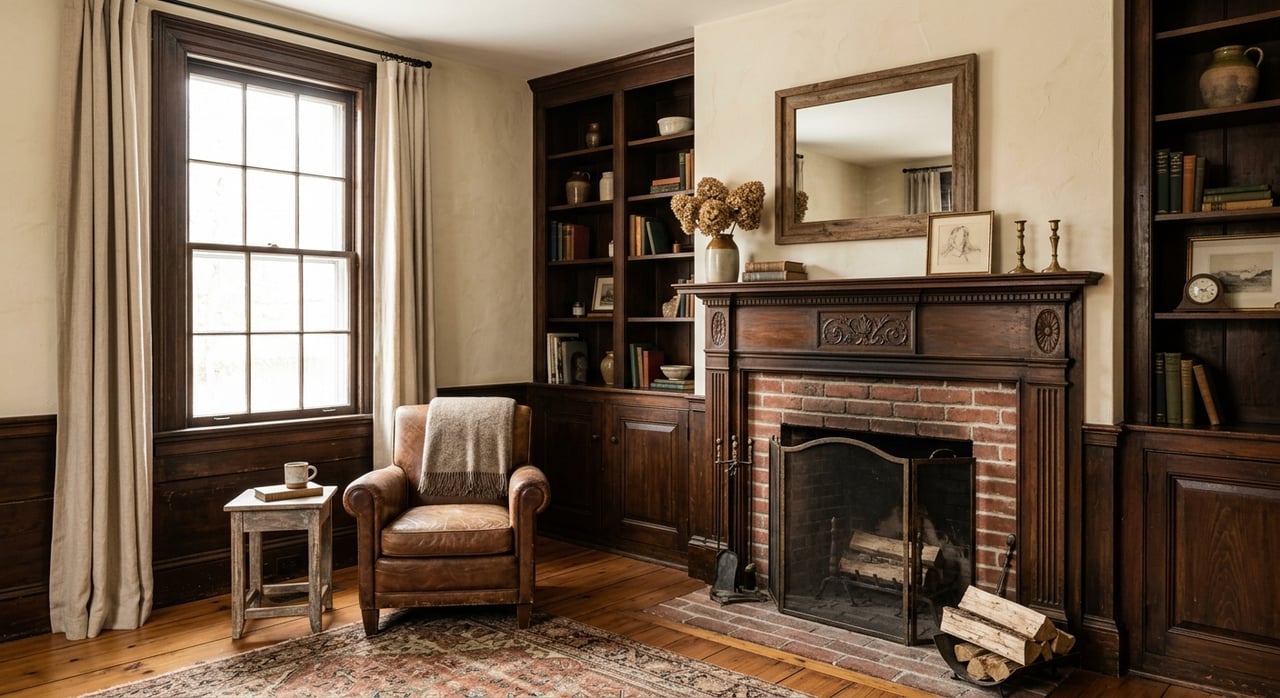
Inside the home, those features may include fireplace mantels, plaster ceiling medallions, paneling, original hardware, lighting fixtures, decorative stairways, and radiators. In practice, your staging should frame those details, not compete with them.
Let original details stay visible
If a beautiful mantel is one of the room’s focal points, do not block it with a large sofa or media console. If a stair run has elegant woodwork, avoid crowding the landing with accent furniture that interrupts the view.
Savannah buyers looking at historic properties often respond to craftsmanship. When you keep those details visible in person and in photos, you make it easier for them to understand what makes the home valuable.
Use the right furniture scale
Furniture that works in a newer suburban home can easily overwhelm older rooms. Historic homes often look best with fewer pieces and better proportions.
The National Park Service’s interior walkthrough guidance supports preserving the visibility of character-defining elements. A smart staging setup uses pieces that fit the room while leaving windows, trim, fireplaces, and circulation paths easy to see.
Avoid a false “period” look
Savannah’s design standards note that the goal is not to copy historic designs exactly, but to encourage work that protects and complements existing contributing resources. That is a useful principle for staging too.
You do not need to create a museum room or add faux-vintage decor to prove the house is old. In fact, overly themed staging can make a home feel artificial. A cleaner approach is to mix simple, neutral furnishings with a few warm textures so the architecture remains the star.
Focus on the rooms that matter most
Not every room needs the same level of attention. According to the 2025 Profile of Home Staging, the rooms most often staged were the living room, primary bedroom, dining room, and kitchen.
That is a practical roadmap for historic homes in Chatham County too. If you are working within a budget, start where buyers spend the most attention online and in person.
Living room
This is often where original millwork, mantels, tall windows, and wood floors make the strongest impression. Keep the layout open and conversational.
Use a rug that defines the seating area without swallowing the floor. Limit bulky seating, and leave enough space for buyers to appreciate the room’s proportions.
Primary bedroom
A staged primary bedroom should feel restful and simple. Use crisp bedding, limited decor, and symmetrical nightstands if the room allows.
If the room has original trim, transom windows, or a decorative fireplace, keep the bed placement from hiding those features. The room should feel calm, not crowded.
Dining room
Historic dining rooms can be dramatic, but they can also feel formal or underused if they are empty. A well-scaled table and a modest place setting can help buyers understand the room without making it look fussy.
Leave enough breathing room around built-ins, moldings, and light fixtures. The aim is to suggest function while preserving openness.
Kitchen
Buyers want kitchens to feel clean, usable, and bright. In a historic home, that may mean editing countertop items, adding light styling, and making sure the room photographs clearly.
If the kitchen blends old and new materials, lean into cohesion. Keep accessories minimal so buyers can focus on layout, storage, and finishes.
Keep exterior staging light-touch
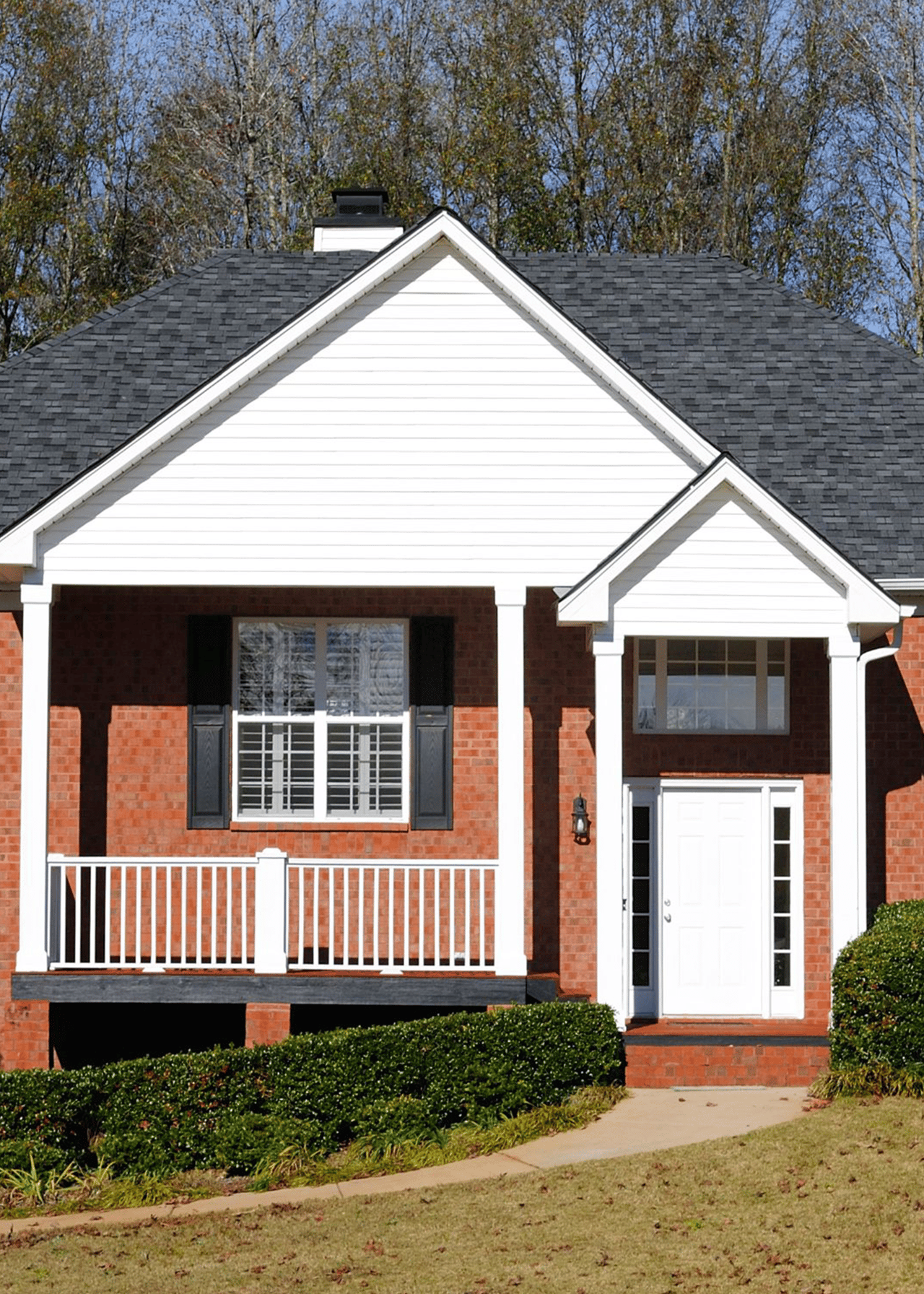
Exterior presentation matters, but in Savannah’s historic districts, it deserves extra care. The City explains that development standards and historic district review processes apply to many renovations and visible exterior changes, with review handled by preservation staff and local boards depending on the district.
A key point for sellers is that the Downtown Historic District’s jurisdiction is tied to exterior visual quality and appearance rather than interior arrangement. That means your interior staging is usually a presentation decision, while exterior changes may require a closer look before work begins.
What to do outside
Good exterior staging usually stays simple:
- Tidy plantings and refresh general landscaping
- Clean porches, steps, railings, and entry doors
- Remove worn or distracting outdoor items
- Use restrained seasonal styling if appropriate
- Make sure the approach to the front door feels open and well-kept
Vegetation changes are generally listed as exempt under Savannah’s Certificate of Appropriateness rules, but other visible changes may not be. According to the City’s application and review procedures, material changes such as exterior color changes, awnings, certain signs, and some changes to walls, fences, screens, and paving may require review.
What to check before changing
If you are thinking about exterior paint, replacing visible elements, adding an awning, or making other street-facing updates, it is smart to verify the process first. The City’s applications and forms page directs applicants to eTRAC and notes that certain material appearance changes in historic districts may require a Certificate of Appropriateness.
That is especially important because Savannah’s downtown standards also regulate items like fences and walls, including material compatibility and restrictions on certain modern materials. If your “quick curb appeal fix” changes how the home reads from the street, check the rules before you spend time or money.
Photography should guide your staging plan
Historic homes often win attention online before a buyer ever books a showing. That makes photography a major part of the staging strategy.
NAR’s survey found that 88% of sellers’ agents said photos were much more or more important to clients. In other words, your staging choices should not only work in person. They should also help the home read clearly in listing photos.
Stage for clean sightlines
Stand in the doorway of each room and ask what the camera sees first. If the answer is clutter, oversized furniture, or visual distraction, edit the room again.
The best listing photos for historic homes usually show depth, light, and architectural detail. Clear pathways, open window lines, and visible trim all help the room feel larger and more memorable.
When professional staging is worth it
Some homes need a lighter hand, and some need more support. Professional staging can be especially helpful if the home is vacant, your current furniture is not the right scale, the layout feels awkward, or your marketing will rely heavily on photos.
The 2025 NAR staging profile found that 21% of sellers’ agents stage all homes, 10% stage only difficult-to-sell homes, and the median spend on a staging service was $1,500. For the right property, that can be a reasonable investment if it helps your home present its best version without stripping away its personality.
In a historic district, the right support is not about making the home trendier. It is about making the layout clear, the details visible, and the final presentation consistent with the property’s age and craftsmanship.
A smart staging mindset for Savannah sellers
If you are selling in Savannah’s Historic District, staging works best when it respects the home first. Clean thoroughly, edit aggressively, scale furniture carefully, and let original details do the heavy lifting.
Just as important, separate interior presentation from exterior changes that may require review. In many cases, the fastest path to a stronger listing is not a dramatic makeover. It is thoughtful preparation that helps buyers appreciate exactly what is already there.
If you want practical guidance on how to prepare a historic Savannah home for the market, Trophy Point Realty Group can help you build a staging and marketing plan that highlights character, photographs well, and supports a smooth sale.
FAQs
What does staging a historic district home in Savannah actually involve?
- Staging a historic district home in Savannah usually means decluttering, deep cleaning, improving furniture layout, and highlighting original architectural details without making exterior changes that could trigger historic review.
What rooms should you stage first in a Savannah historic home?
- The top rooms to prioritize are the living room, primary bedroom, dining room, and kitchen, based on the 2025 NAR home staging report.
Can you paint or update the exterior of a Historic District home in Savannah before listing?
- Maybe, but you should check first because Savannah’s rules say certain exterior color changes and other visible material changes may require a Certificate of Appropriateness.
Do Savannah historic district rules apply to interior staging changes?
- The Downtown Historic District review process is focused on exterior visual quality and appearance, so interior staging is usually a furnishing and presentation decision rather than a board review issue.
Is professional staging worth it for a historic home in Chatham County?
- Professional staging can be worth it if the home is vacant, the furniture is the wrong scale, the layout is hard to read, or listing photos need to do most of the selling.