Thinking about stretching your budget for a lakefront view in Georgetown? The sunsets on Lake Walter F. George are hard to beat, but the ownership math can surprise you. If you are weighing a waterfront home against an interior one, you want a clear picture of price premiums, insurance, docks, and upkeep before you commit. This guide breaks down real costs and rules in Georgetown so you can choose with confidence. Let’s dive in.
Waterfront vs interior in Georgetown
Georgetown sits along the Georgia side of Lake Walter F. George, also known as Lake Eufaula. Much of the shoreline is part of a federally managed reservoir. The U.S. Army Corps of Engineers oversees project lands, lake operations, and what can be built near the water. That management affects dock rights and shoreline use for private owners. You can review lake operations and project-land details in the Corps’ Walter F. George project materials to understand how this works in practice. For background, see the Corps’ overview of Walter F. George as a Corps-managed reservoir.
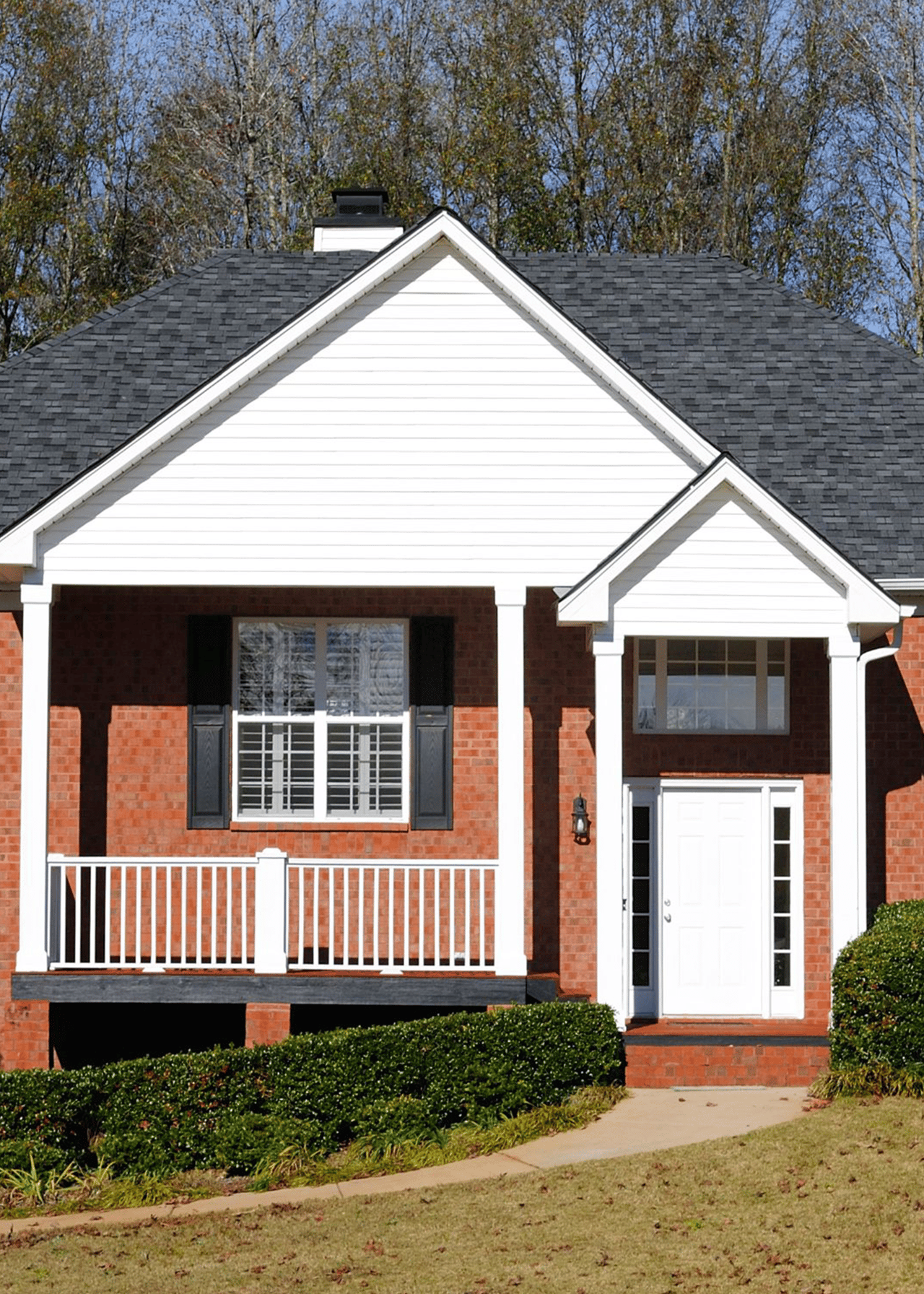
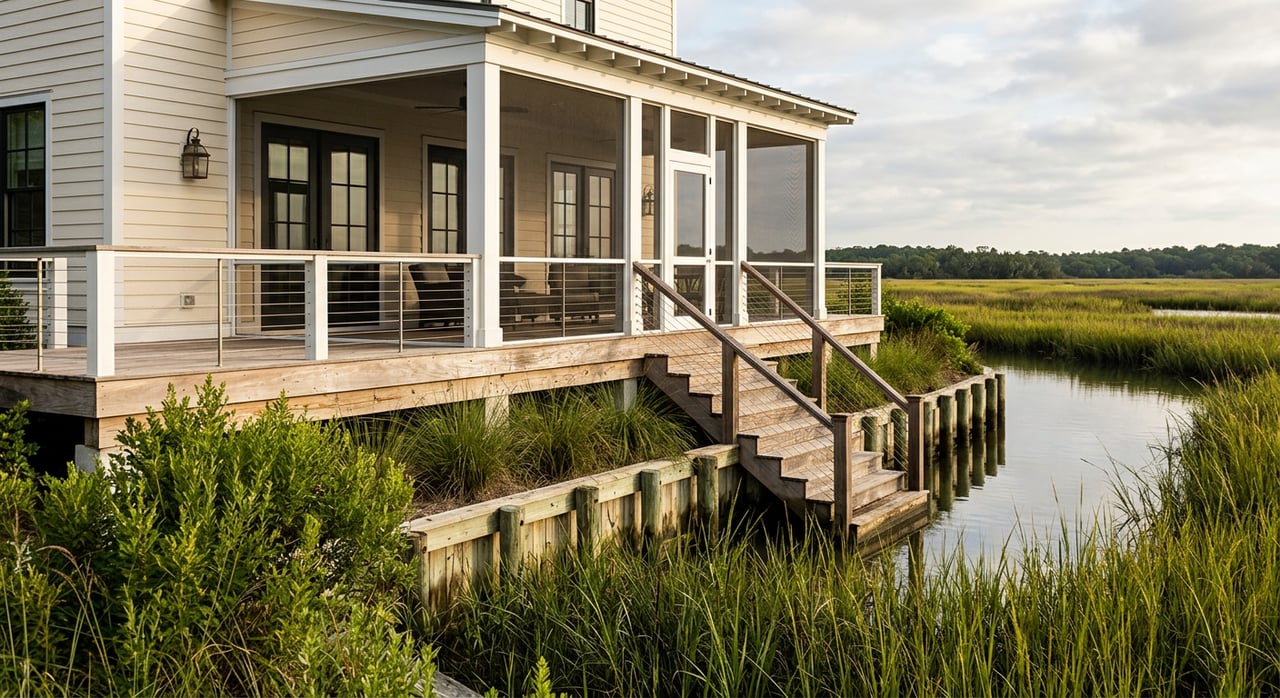
In everyday terms, a “waterfront” home here means direct frontage on the lake or a protected cove or creek that connects to it. Many listings flag “Corps control” on the shoreline, which signals you may need a Corps license to install or maintain a private dock. Interior homes, by contrast, sit off the water and avoid many shoreline rules, but they also miss the direct access and views that drive buyer demand.
Price differences you can expect
In small lake markets like Georgetown, one or two high-value lakefront sales can swing the entire zip code’s median. That is why you should compare address-level data rather than rely only on a monthly median. A useful local marker: a documented lakefront home on Lake Walter F. George sold in late 2023 for roughly $620,000. At the same time, many interior homes in the area list and sell for far less, often in the five-figure or low six-figure range. That spread illustrates how a single waterfront property can sit several times above nearby interior prices.
The bottom line is that there is a real “waterfront premium,” but the size of that premium varies by lot size, water depth, shoreline type, view corridor, and whether you have proven dock rights. In a thinly traded market, focus on paired comparisons between similar homes to isolate the true premium you are being asked to pay.
What drives the premium
- Dock rights and ease of access to deep water.
- Quality of the view and orientation of the home.
- Shoreline type and elevation, which can affect erosion risk and dock placement.
- Lot size, privacy, and on-lot amenities like a boathouse or seawall.
How to value a specific home
- Pull two or three recent waterfront sales with similar shoreline, size, and condition for direct comps.
- Do the same for the closest interior homes with similar square footage and age.
- Compare the adjusted sale prices to see how much of the ask is view/access value rather than house value.
- If the premium hinges on a dock, require written proof of that right.
Flood risk, insurance, and lender rules
Do not assume a lakefront home is low risk for flood. Start with the FEMA Flood Map Service Center to check if the home falls in a Special Flood Hazard Area. Lenders use these maps to decide whether flood insurance is required for loans they make.
If your property is inside a FEMA Special Flood Hazard Area and you use a federally regulated loan, your lender must require flood insurance. You can confirm that lender rule in the Federal Reserve’s interagency flood insurance guidance.
For coverage, the National Flood Insurance Program typically offers up to $250,000 for the structure and $100,000 for contents on most single-family homes. Private flood policies are also available and can provide different limits or terms. Average flood premiums can hover around the $1,000 per year range nationally, but local quotes can be much lower or higher depending on zone and elevation. Review NFIP basics at the NFIP coverage overview.
If your home shows in a flood zone but sits above the base flood elevation, an elevation certificate from a licensed surveyor might reduce premiums or support a Letter of Map Amendment. FEMA’s Online LOMC tool explains the process; start here: FEMA’s LOMA/LOMR guidance.
Practical note: being “in a flood zone” does not make a home unfinanceable or unsellable. It changes your recurring costs and the documents you need for closing. That is manageable with early quotes, an elevation certificate, or a private-market flood option if needed.
Dock rights and shoreline control
Because the lake is federally managed, you must confirm whether the lot includes dock rights and what permits are needed. There may be a strip of Corps project land or an easement between your lot and the water. In many cases, installing or maintaining a private dock requires a license from the Corps. Review the Corps’ policies in their Walter F. George project documentation, then verify details for your specific parcel.
Ask the listing agent for the deed and plat, any recorded dock or license agreements, and evidence of prior Corps dock permits on the lot or immediate neighbors. If a dock is the reason you are paying a premium, require proof of dock rights in writing before you complete inspections. Also check any HOA rules that might limit docks or boat storage, and confirm local planning norms with Georgetown–Quitman County offices. You can find a contact starting point in recent county commission minutes.
Ownership costs to budget
Waterfront living can include higher or different recurring costs than an interior home. Here are the big ones to plan for:
- Flood insurance. If required by your lender, budget for a separate flood policy. NFIP-style premiums average around $1,000 per year nationally, but quotes vary widely by zone and elevation. See NFIP coverage basics.
- Dock construction and upkeep. Install costs vary from a few thousand to tens of thousands based on size and materials; budget an annual reserve for maintenance and future repairs. Review ranges at HomeAdvisor’s dock cost guide.
- Shoreline stabilization. If your site needs a seawall or other protection, materials and installation can run roughly $150 to $600 per linear foot for common options. See the same HomeAdvisor guide on docks and seawalls.
- Septic system care. Many lake lots use private septic. Pumping typically runs about $300 to $500 per service visit; plan on regular inspections and pumping every 3 to 5 years. See HomeAdvisor’s septic pumping costs.
- Insurance scope. Standard homeowners policies may price waterfront exposures differently. NFIP flood policies do not cover docks and landscaping, so budget separately for those items. See NFIP coverage notes.
The numbers below are a simple illustration to help you compare annualized costs. Actual quotes depend on your lot, elevation, shoreline, and carrier.
| Cost item | Waterfront example (annual) | Interior example (annual) |
|---|---|---|
| Flood insurance premium | $1,000 to $2,500 if required | $0 to $1,200 if outside SFHA |
| Dock upkeep reserve | $500 to $1,500 | $0 |
| Septic pumping (annualized) | $100 to $170 | $100 to $170 |
| Shoreline work reserve | $500 to $2,000 if needed | $0 |
Note: Ranges use national aggregator averages for illustration; get local bids for accuracy.
Resale and rental potential
Lake Eufaula is a regional draw for boating and fishing, which supports buyer demand for second homes and potential short-term rentals. Long-term rental demand in the immediate area is thinner, so most income potential ties to seasonal or vacation stays. Because there are relatively few sales, waterfront values can move sharply with the season and may need longer market time in slower cycles. The best way to price or evaluate value is to use paired sales, comparing a waterfront home to nearby interior homes with similar size and condition.
If you plan to rent, confirm rules before you project income. County-level regulations may be light, but HOA covenants or deed restrictions can limit short-term rentals. Start by contacting local offices listed in Georgetown–Quitman County’s public records, and then review any subdivision-specific covenants.
Quick buyer checklist
- Verify shoreline control and project-land boundaries. Contact the USACE project office and review your deed and plat. Start with the Corps’ Walter F. George project info.
- Pull FEMA flood maps for the address. If the structure is inside an SFHA, plan for a flood policy. Use the FEMA Flood Map Service Center.
- Get early insurance quotes. Price homeowners plus a separate flood quote. NFIP limits and private-market options are summarized in the NFIP coverage guide.
- Consider an elevation certificate. If maps are borderline, an elevation certificate can reduce premiums or support a LOMA. See FEMA’s Online LOMC process.
- Confirm dock rights. Ask for any recorded dock licenses and proof of past Corps approvals on the lot or neighbors.
- Inspect septic and shoreline. Order a full inspection, including septic and shoreline condition, and get estimates for any needed stabilization. Cost ranges are outlined in HomeAdvisor’s guides.
- Check taxes and assessments. Contact the Quitman County tax office for millage and billing. Start at the county tax office site.
Which one is right for you?
Choose waterfront if direct access, views, and recreation are central to your lifestyle and you are comfortable with added complexity around insurance, docks, and maintenance. The upside is daily enjoyment and strong appeal to future buyers who want the same. Choose an interior home if you value lower upfront cost, simpler ownership, and less exposure to flood and shoreline variables. You can still enjoy the lake through public access while keeping your budget focused on house features.
Either way, the key is due diligence. Confirm flood maps and lender requirements early, verify dock rights in writing, and budget for realistic ownership costs. You will make a confident choice when the numbers and rules are clear.
Ready to run the numbers on a property you have in mind? Reach out to Trophy Point Realty Group for straight answers, smart valuation, and a clear plan to close with confidence.
FAQs
What counts as “waterfront” in Georgetown on Lake Walter F. George?
- Waterfront typically means direct frontage on the lake or a connected cove/creek, where shoreline use and docks may be subject to U.S. Army Corps of Engineers rules.
How big is the price premium for Georgetown waterfront vs interior homes?
- It varies widely; recent lakefront sales around the lake have closed in the mid to high six figures, while many interior homes trade much lower, often in the five-figure or low six-figure range.
How do FEMA flood maps affect my mortgage and insurance on a lake home?
- If your home is in a FEMA Special Flood Hazard Area and you use a regulated loan, your lender must require flood insurance; check the FEMA map tool and confirm with your lender.
How can I lower a high flood insurance quote on a lakefront home?
- Order an elevation certificate; if the structure sits above base flood elevation, it may support a Letter of Map Amendment through FEMA’s Online LOMC process.
What should I confirm about dock rights on a Corps-managed lake?
- Ask for the deed/plat, any recorded dock or license agreements, and written proof of past or current Corps approvals tied to your parcel.
What ongoing maintenance costs are unique to waterfront ownership?
- Budget for potential flood insurance, dock upkeep, and shoreline stabilization in addition to standard items like septic inspections and pumping.
Are short-term vacation rentals allowed for lake homes in Georgetown?
- Rules vary; check subdivision covenants and confirm local guidance with Georgetown–Quitman County offices listed in public county records.